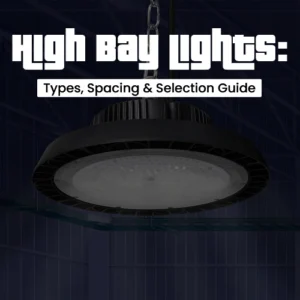
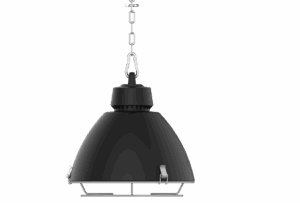









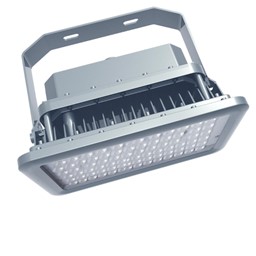
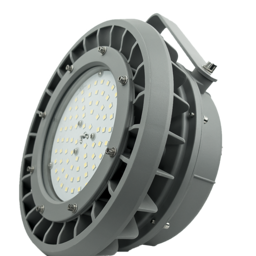


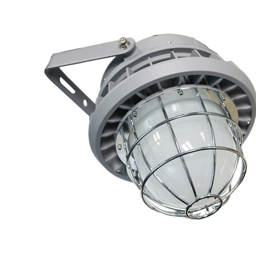

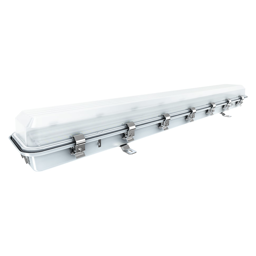

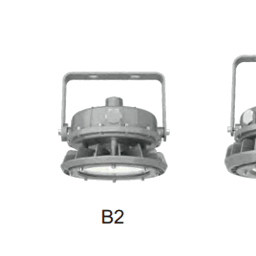
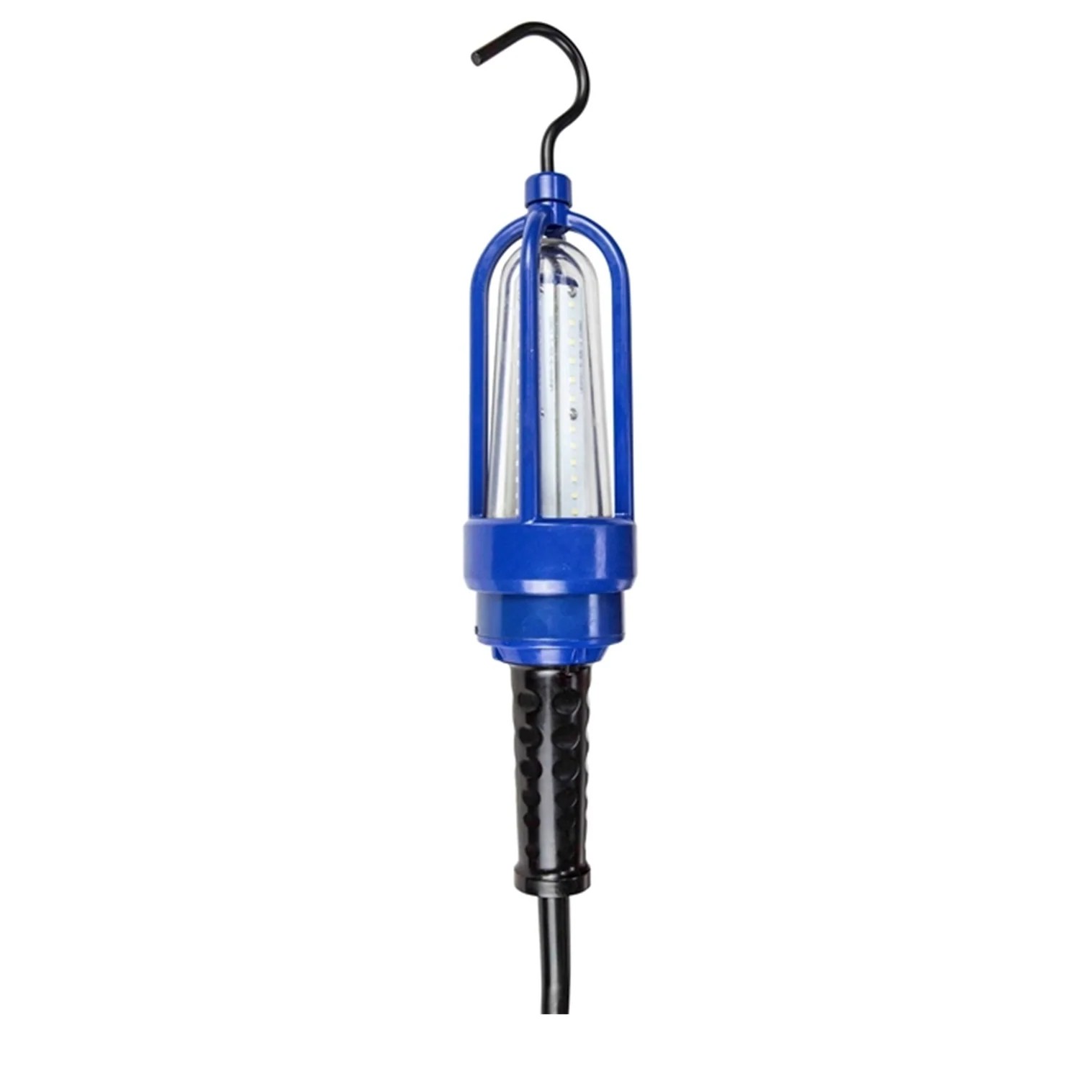

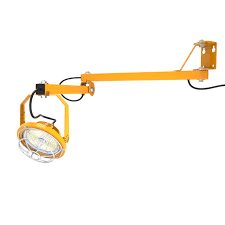

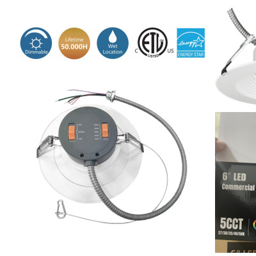

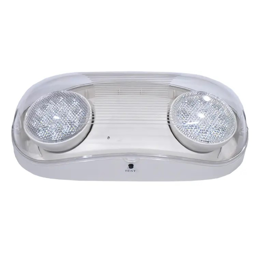









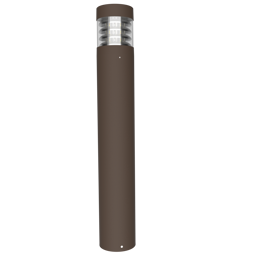

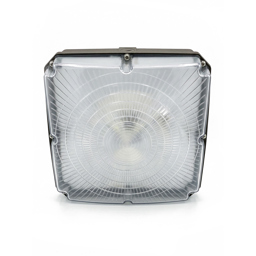
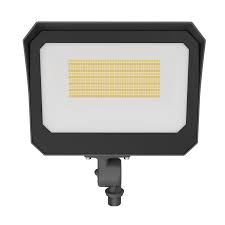
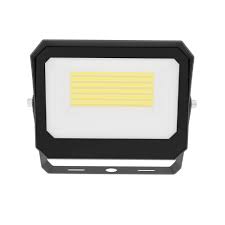






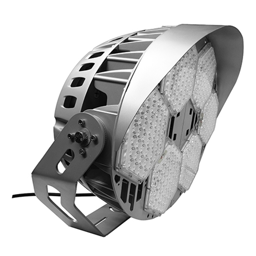


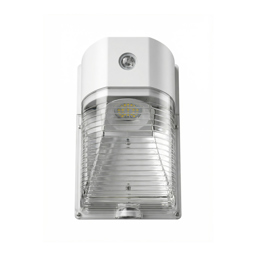
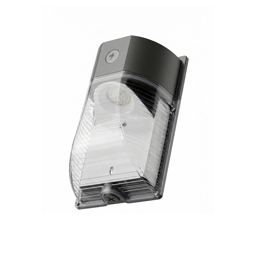








Let us begin with the basics. High bay lights refer to lighting equipment that is used for illumination of large industrial areas with high ceilings. It is worth noting that “high bay” is not just a fancy word but rather a classification category.
The industry rule of thumb is straightforward: high bay lights are intended for ceilings 20 feet or higher. Below that threshold, typically between 12 and 20 feet, low bay fixtures are the right choice. This distinction exists because high bay lights use narrower beam angles to direct light downward efficiently over greater distances, preventing the light from scattering before it reaches the work surface. In specialized applications such as Greenhouse lighting, proper fixture selection is also important to ensure light reaches the required area effectively.
Key Takeaways:
- Ceiling height is key: High bay lights should be chosen for ceilings that are 20 feet or higher. Lower ceilings require low bay lights instead.
- Round UFO or Linear?: Circular UFO lights suit well in wide areas with high ceilings, whereas linear lights provide better illumination on the racks.
- Lumens are the measure of light intensity: Not watts! Higher ceilings require more lumens to ensure adequate lighting.
- Choose only DLC and UL certified lights: That shows the efficiency of lights as well as their safety and eligibility for rebates.
- LED high bay lights save you money: Up to 70 percent less energy consumed and lower maintenance expenses compared to HIDs and fluorescent lights.
Why is this important? The installation of a high bay light on a room having a ceiling 15 feet high will result in intense glare and poor lighting since the beam will be too strong for that particular height. On the other hand, the use of a low bay light in a 30 feet tall warehouse will result in a poorly lit floor.
Where are high bay lights typically found? Common applications include:
- Warehouses and distribution centers
- Manufacturing plants and factory floors
- Gymnasiums and indoor sports arenas
- Big-box retail stores
- Aircraft hangars and large exhibition spaces
Such facilities require the use of high bay lights to ensure worker safety, efficiency, and effectiveness. Inadequate lighting causes workers to perform slowly, make mistakes and pose dangers to themselves. High bay LED lights fixes such issues and reduces energy costs.
High Bay Lights vs Low Bay Lights: Key Differences
Facility managers generally believe that the same light can be used in any place without making any difference. This misconception results in wastage of electricity, bad visibility, and money. The following table will highlight the basic differences between high bay lights and low bay lights.
| Feature | High Bay Lights | Low Bay Lights |
| Ceiling Height | 20 feet and above | 12 to 20 feet |
| Typical Lumen Output | 15,000 to 60,000+ lumens | 10,000 to 20,000 lumens |
| Beam Angle | Narrower (60° to 90°) | Wider (120°+) |
| Common Applications | Warehouses, factories, gyms, hangars | Retail stores, supermarkets, workshops, garages |
| Light Distribution | Focused, intense beam | Wide, even spread |
The height of installation influences every other specification. High bay lights have more lumens since there is a requirement for light to travel farther downward. These fixtures also have narrow beam spreads, which usually range between 60° and 90°. This helps focus the light where it is most required. On the other hand, low bay fixtures have wide spreads of up to 120°.
The implications of getting it wrong are significant. A high bay light installed in an area with a low ceiling will create too much light and glare, creating an uncomfortable and even unsafe environment. A low bay installed in an area with a high ceiling cannot provide sufficient light to the floor, leaving you with a dark and shadowy area, similar to the challenges seen in horticulture lighting, which can hamper productivity. This is the most crucial step in the selection of high bay LED lights.
Feature Article: Hazardous Area Lighting: Safety & Class Guide
Types of High Bay Lights and Their Best Applications
Once the decision to use high bay lights is made, one must decide which kind of lights to go for. There are mainly three types of high bay lights; these include the UFO, Linear and Vapor-Tight.
UFO High Bay Lights
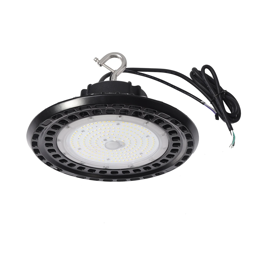
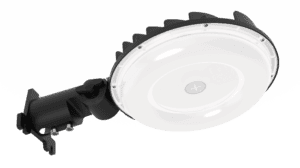
Named for their round, saucer-like appearance, UFO high bay lights are the most popular choice for open industrial spaces . Their compact design houses powerful LEDs with advanced heat sinks that extend operational life .
Best For:
- Open floor plans with high ceilings (25–50+ feet)
- Warehouses, gymnasiums, aircraft hangars
- Replacement of metal halide fixtures
Key Advantages:
- High efficiency: Many models achieve 130–200 lumens per watt
- Durability: Die-cast aluminum housings with IP65/IP66 ratings withstand dust, moisture, and impacts
- Simple installation: Single hook or chain mounting reduces labor costs
- Beam angle options: Available in 60°, 90°, and 120° to match ceiling height
Limitations:
- May leave gaps if spaced too far apart; careful placement required
- Less suitable for narrow aisles or spaces with tall racking
Linear High Bay Lights
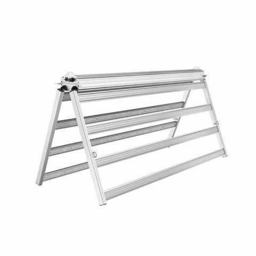
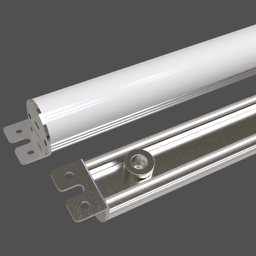
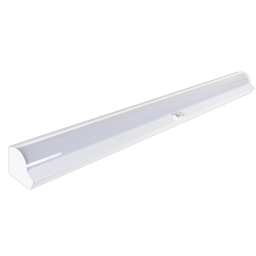
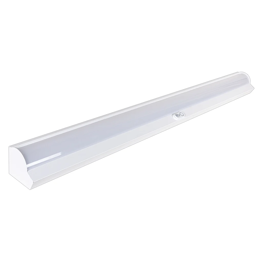
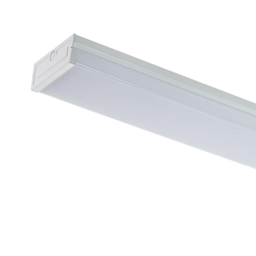
Linear high bay lights have a rectangular, elongated design that distributes light in a longer footprint. They excel in spaces where uniform illumination across aisles and shelving is critical .
Best For:
- Warehouse aisles and narrow corridors
- Distribution centers with tall racking
- Assembly lines and manufacturing floors
- Replacement of fluorescent high bay fixtures
Key Advantages:
- Superior uniformity: Rectangular diode arrangement provides even light distribution without shadows between shelves
- Excellent glare control: Softer illumination reduces eye strain for workers
- Versatile mounting: Suspended by chains, cables, pendants, or surface-mounted
- Multiple lengths: Available in various widths to fit different spaces
Limitations:
- More complex installation requiring two mounting points
- Generally higher upfront cost compared to UFO fixtures
Vapor-Tight High Bay Lights
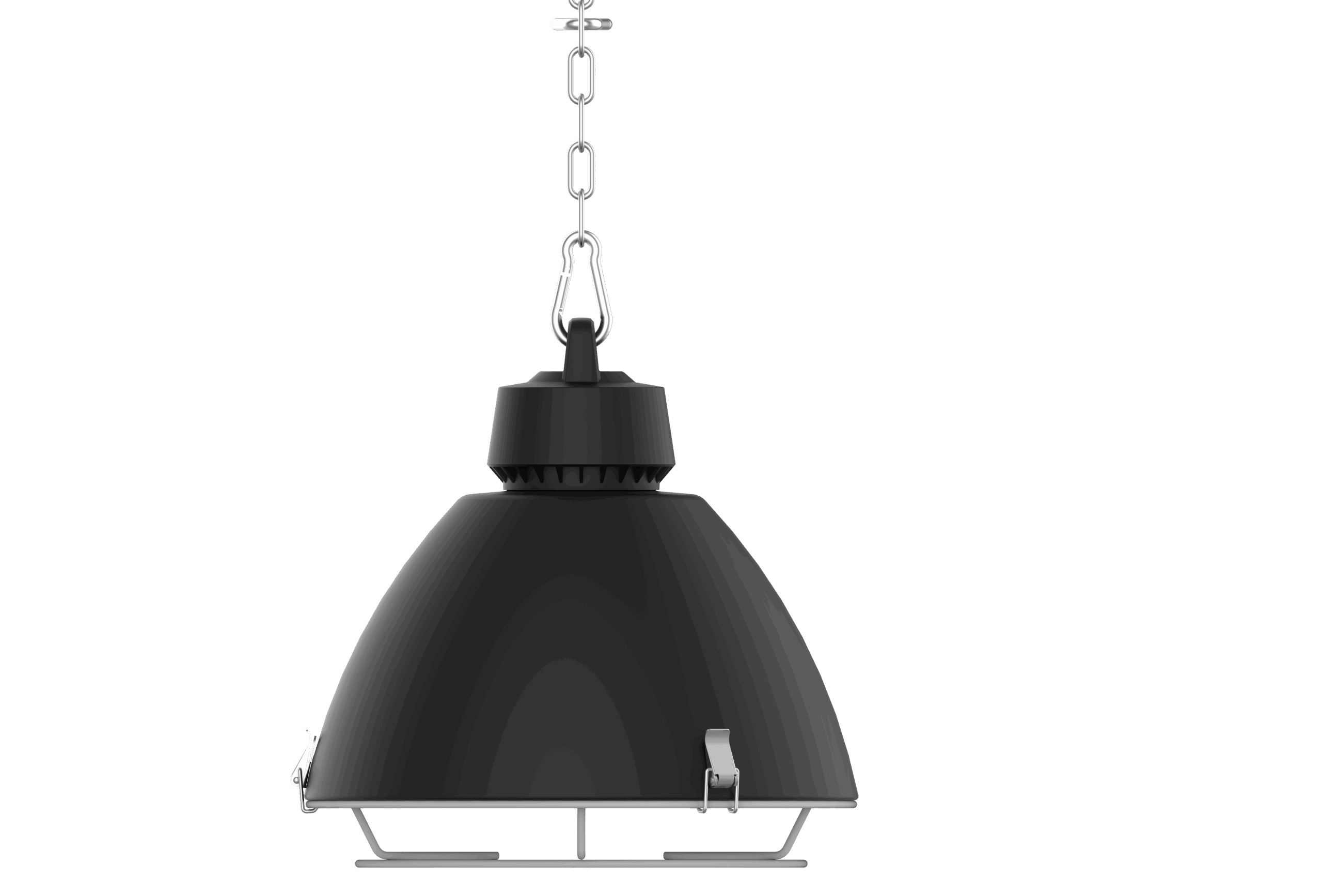
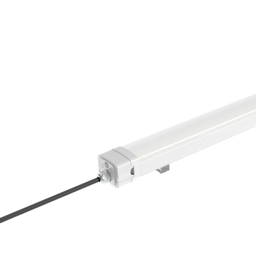
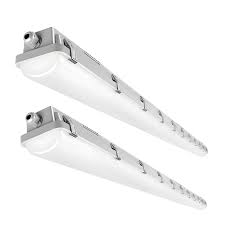
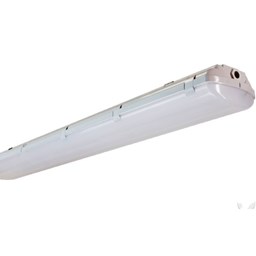
Vapor-tight high bay lights are sealed fixtures designed to withstand harsh conditions including moisture, sprayed water, chemicals, and dust .
Best For:
- Food processing facilities and industrial kitchens
- Car washes and laundries
- Walk-in freezers and cold storage
- Dusty commercial environments
Key Advantages:
- Sealed construction: Gasketed housings lock out contaminants
- Easy cleaning: Smooth surfaces simplify sanitation
- Durable materials: Fiberglass housings with impact-resistant lenses
- Wide options: Available in lengths from 2 to 4 feet with up to 40,000 lumens
Limitations:
- Typically lower wattage and lumen output than open fixtures
- Higher cost due to specialized construction
| Fixture Type | Best For | Key Advantages | Limitations |
| UFO High Bay | Open spaces, high ceilings, industrial settings | High efficiency, durability, easy installation | May leave gaps; less suitable for aisles |
| Linear High Bay | Narrow aisles, assembly lines, retail environments | Even light distribution, glare control | More complex installation; higher cost |
| Vapor-Tight High Bay | Food processing, cold storage, wet/dusty environments | Sealed against contaminants, easy to clean | Lower output options; higher cost |
Feature Article: Best Solar Street Lights Guide: Types, Cost & Buying
How to Choose the Best High Bay LED Lights for Your Facility
Selecting the best high bay LED lights requires a systematic approach. The following framework covers the essential factors to evaluate before making a purchase.
1. Analyze Ceiling Height
Ceiling height remains the primary determining factor. High bay lights are designed for ceilings 20 feet and above . For facilities with ceilings between 15 and 20 feet, some manufacturers offer high bay options, but careful evaluation of beam angle and lumen output is required . For ceilings under 15 feet, low bay or other commercial lighting solutions are more appropriate .
2. Determine Lumens, Not Just Wattage
Wattage measures energy consumption; lumens measure brightness. Shopping by lumens ensures the right light level for the space .
General lumen guidelines based on ceiling height:
- 10–20 feet: 10,000–15,000 lumens
- 20–30 feet: 16,000–30,000 lumens
- 30–40 feet: 30,000+ lumens
Many modern high bay LED lights feature selectable wattage, allowing adjustment of lumen output on-site to match specific needs .
3. Select the Right Beam Angle
Beam angle determines light spread. For high bay lights, the choice typically falls between 60°, 90°, and 120° .
- 60°: Most focused; suitable for very high ceilings (40+ feet) where intensity must reach the floor
- 90°: Versatile choice for ceilings 20–40 feet
- 120°: Widest spread; better for lower mounting heights (under 25 feet) or spaces needing broader coverage
4. Choose Color Temperature (CCT)
Color temperature impacts how good visibility is and the effect it will have on someone. The scale for color temperature goes from warm to cool and is measured in Kelvins (K). The color temperatures recommended for commercial and industrial purposes are 4000K and 5000K.
- 4000K: Clean, neutral light; suitable for retail and general commercial spaces
- 5000K: Bright, energizing light; preferred for warehouses and factories where alertness is critical
Field-selectable CCT fixtures allow post-installation adjustment if unsure .
5. Consider Color Rendering Index (CRI)
CRI measures how accurately colors appear under the light. A CRI of 80+ is standard for most industrial and commercial applications . For detailed work like quality control or color matching, consider fixtures with CRI 85 or higher .
6. Evaluate Controls and Sensors
Motion sensors and daylight harvesting can dramatically reduce energy consumption, especially in spaces that are not continuously occupied. 0–10V dimming is the most common and effective method for adding flexibility . Plug-and-play sensor ports on many modern fixtures simplify integration without extra wiring .
7. Check Certifications: DLC and UL
DLC (DesignLights Consortium) certification ensures high efficiency and makes fixtures eligible for utility rebates . UL (Underwriters Laboratories) certification confirms the fixture meets stringent safety standards. Both certifications protect the investment and provide peace of mind .
Feature Article: LED Troffer Lights: Energy-Efficient Lighting for Any Space
Best High Bay Lights for Warehouses, Factories, Gyms, and Retail Spaces
Different facility types have distinct lighting priorities. The following table provides practical recommendations based on industry experience and manufacturer guidance.
Warehouse and Distribution Center (Open Layout)
- Recommending Fixture: UFO High Bay Light
- Color Temperature: 4000K to 5000K
- Mounting Height: 25 Feet to 45 Feet
Why It Works: A large ceiling height requires concentrated lighting. The UFO high bay light directs light where it needs to go while being able to handle the environment of a warehouse. Single point mounting is cost effective.
Narrow Aisle Warehouses with High Racks
- Suggested Light Fixtures: Linear High Bays
- Light Color Temperature: 4000K – 5000K
- Mounting Height: 20 to 35 feet
Why It Works: Consistent lighting ensures uniform lighting distribution without creating shadows between tall racks. Glare is minimized with linear high bay lighting fixtures, which allows operators to read labels easier.
Factories and Manufacturing Plants
- Suggested Fixtures: UFO or Linear High Bay (based on need)
- Color Temperature: 4000K to 5000K
- Height from Floor: 20 to 35 feet
Why it Works: The UFO can handle rough conditions. Linears offer smooth illumination without glare. Factories commonly use a mix of the two types of fixtures where necessary.
Gymnasiums and Indoor Sports Facilities
- Recommended Lighting Fixtures: UFO High Bay
- Color Rendering Index: 4000K-5000K
- Installation Height Range: 25 to 40 feet
Why it Works: The fixtures are extremely impact resistant and can thus withstand balls and equipment hitting them. The UFO high bay lights provide high illuminance throughout the playing field.
Retail Stores and Showrooms
- Suggested Fixture: Linear High Bay
- Color Temperature: 3500K to 4000K
- Mounting Height: 18 to 30 feet
Why it Works: Even light distribution without glare enhances the attractiveness of merchandise. Linear high bay lights provide an elegant design along with a warm color temperature.
Through proper consideration of the type of fixture and its specifications for the particular facility, companies are able to get optimal results from their high bay LED lighting systems. This initial process of choosing the correct solution is worthwhile because of increased visibility, energy savings, and reduced maintenance requirements.
Feature Article: Commercial LED Lights: Your Complete Efficiency Guide
Why Businesses Choose Mesla Lighting High Bay Lights
Selecting the right fixture is only part of the equation. The supplier behind the product matters just as much. Mesla Lighting has built a reputation for providing reliable, high-performance lighting solutions backed by genuine expertise and customer support.
- High-Efficiency LED Technology: Mesla’s high bay LED lights are engineered for maximum energy savings, delivering up to 70% reduction in energy consumption compared to traditional HID or fluorescent systems . This translates directly to lower utility bills and faster ROI.
- Industrial-Grade Durability: Built with robust materials and advanced heat dissipation designs, Mesla fixtures withstand the demands of challenging commercial and industrial environments . Dust, moisture, and impacts are no match for these rugged lights.
- DLC/UL Compliant Options: Mesla offers fixtures with critical certifications for safety, efficiency, and utility rebate eligibility . This ensures customers maximize their investment while meeting regulatory requirements.
- Long Lifespan: Quality high bay LED lights from Mesla deliver over 50,000 hours of reliable illumination . Fewer replacements mean lower maintenance costs and less downtime.
- Commercial and Industrial Expertise: Mesla doesn’t just sell lights, the team understands the challenges facility managers face. From performing lighting audits to providing tailored recommendations, Mesla acts as a partner in the lighting journey.
- Customized Solutions: Every facility is unique. Mesla works closely with clients to find the perfect lighting solution for specific needs, whether that means selecting the right fixture type, adjusting color temperature, or integrating sensors and controls.
When businesses choose Mesla Lighting, they’re not just buying fixtures. They’re investing in a partnership built on quality, reliability, and genuine service, exactly the kind of support that makes a lighting upgrade successful.
Feature Article: Commercial LED Lights: Your Complete Efficiency Guide
Final Thoughts
Selecting the right high bay lights should not pose any challenge at all. Knowing what to consider in terms of ceiling height, lumens, beam angle, color temperature, and certification helps you make an informed decision that can add value.
The right high bay LED lights selected will transform your building into an area that is safe, efficient, and cost-effective to run. For spaces that also support indoor growing needs, solutions like UV light for plants can also play an important role in creating the right lighting environment. The wrong choice, on the other hand, will only waste energy and money. Investing the time to evaluate all factors will benefit you in the end.
Mesla Lighting is the company that can help with such a choice. From initial consultation to final installation, Mesla stands behind every product and every customer.
FAQs
Q1. How many high bay lights do I need for a warehouse?
The number depends on ceiling height, floor area, and desired brightness levels. A general guideline is to space fixtures roughly as many feet apart as the mounting height, for a 25-foot ceiling, space lights about 25 feet apart . However, a professional photometric analysis provides the most accurate layout for specific spaces.
Q2. What ceiling height requires high bay lights?
High bay lights are designed for ceilings 20 feet and above. For ceilings between 12 and 20 feet, low bay lights are the appropriate choice .
Q3. Are LED high bay lights worth it?
Absolutely. LED high bay lights provide up to 70% savings on energy, up to 50,000+ hours of lifetime (which means greatly reduced maintenance), and also have better light quality than HID or fluorescent lamps. This investment is rapidly returned due to savings on energy and maintenance.
Q4. What is the best color temperature for high bay lighting?
4000K (neutral white) and 5000K (daylight) are most common for commercial and industrial spaces . 5000K is particularly popular in warehouses and factories where alertness and visibility are critical.
Q5. Can LED high bay lights replace metal halide fixtures?
Of course they do. In many cases, an LED fixture using considerably less wattage can actually replace a 400 or 1000 watt metal halide, providing just as much lighting but using up much less energy. LEDs also eliminate warm-up time, restrike delays, and frequent bulb replacements.